Search This Blog

Sunday, August 15, 2010

Cop an Eiffel


I thought I would treat myself, being my last day in Paris and all, with lunch up the Eiffel Tower. But I was sorely disappointed ...

1. Order
2. Take buzzer
3. Wait for buzzer to buzz
4. Take a wire basket
5. Collect meal, each course packaged in a separate container
6. Take basket back to your table and hope no one has stolen your prime position at the window.

(The only redeeming feature of service is that your wine is poured at your own table.)

By now you're probably wondering what I ordered:

Soupe à L'oignon Gratinée?
Boeuf Bourguignon?
Crème brûlée?

No. (Remember I said sorely disappointed?)

No French fare ... a Cheeseburger and strawberry cheesecake were the pick of the bunch.

It was about now I found out the fine dining restaurant, Le Jules Verne, was closed for renovations. Oh well, there's always next time.

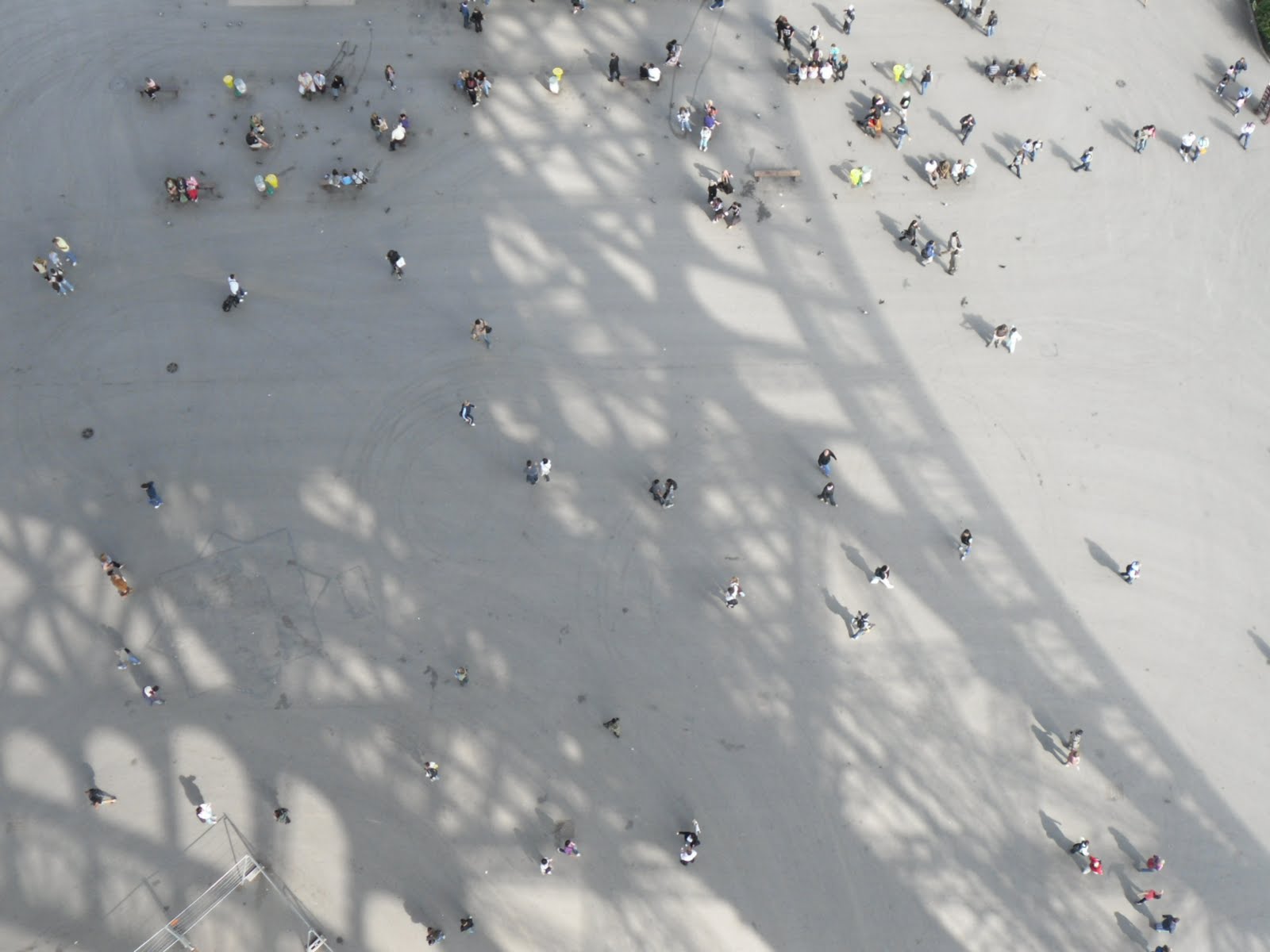
Lucky the views are worth it ...


Photos are my own.

Wednesday, July 28, 2010

How to draw the Eiffel Tower

How fun is this – Learn how to draw the Eiffel Tower!! One of my friends emailed me this to me earlier in the week (yes, she still loves me even though knows of my all-things-French obsession).

The printable version can be found here, where you are given a step-by-step drawing demonstration including a nifty colour code – “Follow the red lines in each illustration to learn exactly what to draw in that step. The lines drawn in previous steps are shown in gray.”

Give it a go!


1. Draw a Triangle
Draw a large triangle and split it in two vertically with another line. Add a long horizontal line near the bottom of the triangle for the ground.


2. Lines and Rectangles
Draw three sets of horizontal lines as shown. Add a small arch near the top of the triangle. Shape the tower with three sets of slightly angled lines. Add a set of vertical lines to both of the lower horizontal tiers to create rectangles.


3. Connect the Lines
Draw two vertical lines under the arch. Connect them at the top with a horizontal line. Add a second line to each of the slightly bent lines as shown. Draw an upside-down Y in the top tier with double lines. Divide the rectangle near the center of the tower with a double horizontal line and a single horizontal line.

Connect the upper double horizontal line to the line above it with an angled line. Add two short vertical lines to the single horizontal lines to connect them to the lines below. Continue double lines below the second horizontal tier. Draw double angled lines below the third horizontal tier. Use curly lines to add shrubs.


4. Supports
Draw many sets of double horizontal lines for the supports. Add several diagonal lines below the upper part of the tower. Detail the two lowest rectangles with short double horizontal lines. Outline the lowest rectangle. Add more shrubs with curly lines.


5. Details
Draw double X-shaped figures in all the rectangles created by the previous step. Shade the horizontal tiers with diagonal lines. Add double bent lines to the curve at the bottom of the tower and to the area above it.


By the Editors of Publications International, Ltd.

Sunday, July 18, 2010

Le Mont St Michel

One of the most intruiging places on earth and also one of the most photographed, Le Mont St Michel rises into view across surrounding paddocks. Accessed by a causeway only at low tide, the Mont is home of approximately 40 inhabitants and visited by millions of tourists.


The abbey at the top of the mount is well worth the hike, especially so considering the monks who built it (starting in the 8th century) also had to contend with the fickle tides.


But, don't forget to check out the shops and restaurants along the way on both sides of the narrow steep alleys on the way up to the Abbey!

Friday, July 2, 2010

MK!


How friggin cool is this ... Thanks to Michael Kors, I can get merchandise emblazoned with my initials and I don't have to "special order" it!
Downside is, I still have to pay for it!!


Watches ...


Handbags ...


Shoes ...


And ...


Wellies!


Images from michaelkors.com

Friday, June 25, 2010

Castelnou


Ranked as one of France’s “les plus beaux villages” (most beautiful villages), Castelnou is located close to the Spanish border, approximately 20 kms southwest of Perpignan.

The village’s design is dictated by the sheer, jagged ridges of the rock on which it was built - set against the stunning backdrop of the Canigou, the Catalans’ mythical mountain. It is guarded by Château du Vicomtal, which originated in the 10th century and which over the centuries has been destroyed and restored twice. Ramparts were built in the middle of the 14th century to protect the village. They feature eight towers and you access the village between two of them.


Cars are not allowed inside the village at all (there is a car park outside the walls), you can’t see a single electrical cable, all the streets are still cobbled, and building is prohibited with any renovation work strictly regulated to stay faithful to the original materials and techniques. Here, you can truly pretend to live in the Middle Ages.


The local community is so small (only 70 regular inhabitants). Houses in the village are sought after and about half are second homes, mostly belonging to wealthy Parisians. Castelnou is a draw card for artists and artisans too, including jewellery-makers and potters who take their inspiration from the beauty of the village and surrounds.

Images courtesy of Trekearth and Les Plus Beaux Villages de France

Tuesday, June 22, 2010

Chocolat ...


Debauve & Gallais ... French chocolatiers ... mmm!

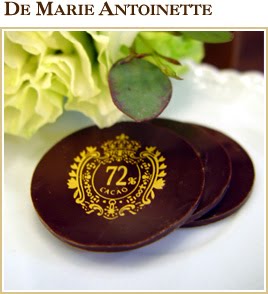
Sulpice Debauve, pharmacist to King Louis XVI and official purveyor to the French royal court, opened his first chocolate and tea shop on the left bank of Paris in 1800. In 1819 the company received the royal warrant as purveyors to the French court and was the official chocolate supplier of Kings Louis XVIII, Charles X and Louis Philippe. The company adopted their current name after Debauve’s nephew Antoine Gallais joined the company in 1823.


Introduced by Debauve, this range of chocolate "coins" was first developed for Queen Marie Antoinette in order to ease her distate for taking medicines. She was so delighted with them that Monsieur Debauve was commissioned to create an entire collection called the Pistoles de Marie Antoinette.


Their range of “Bonbons” – equally delectable! The bonbon assortments are encased in Debauve & Gallais' official trademark blue, gray, and gold embossed box and were handmade exclusively for royalty before finally becoming available to the public in 1913.


For the extreme chocolate fan, “The Louis XVI” is for you at just $900 USD (=$1,025 AUD). The Louis contains the Royal 70 assorted bonbons, Pistoles de Marie Antoinette collection, Les Annes Folles, as well as an assortment of bouchees, Carres, and Mini-Tablettes.


Don’t forget what else is on offer – Tea, which, according to their website, the Debauve & Gallais teamaster sources by “traversing continents, crossing oceans, and braving mountains to bring you only the rarest and the finest in your cup”…


Thé Marie Antoinette - Combination of a delicate China White Tea and White Chocolate


Images courtesy of Debauve & Gallais

Monday, June 21, 2010

Joules


I love Brit fashion. I love Brit winter fashion even more. I love it because I really can’t justify the gorgeous layering of knits, scarves, cardigans, jackets, more scarves, leggings, boots, beanies (and/or berets) in this climate. When I was in the UK last year, I came across the clothing brand Joules.
LOVE, LOVE, LOVE!


A UK-based brand, Joules Clothing “aims in promoting not only casual fashion and comfort, but also in upholding the British lifestyle”. It supports the one sport that has a big significance in the nation’s culture: horseback riding, with most of their designs being equestrian in character. Do these polo shirts conjure up images of a day at Royal Ascot where one might bump into a royal or two … Oh, is that you, William?


Brit tradition is also supported by Joules, with their current wardrobe highlighting the use of tweed fabric. Tweed can be casual, formal and street, or reserved and formal depending on how it is worn and matched with other clothes and accessories. I love Joules because it makes even the traditional look cool (ok, perhaps you only get away with it in the the UK, not Australia).

The best thing is – Joules Clothing is available online!!! And, they ship to Australia!!!
Yay, oh happy days!


Wellies!


Images courtesy of Joules Clothing (UK)
Related Posts Plugin for WordPress, Blogger...